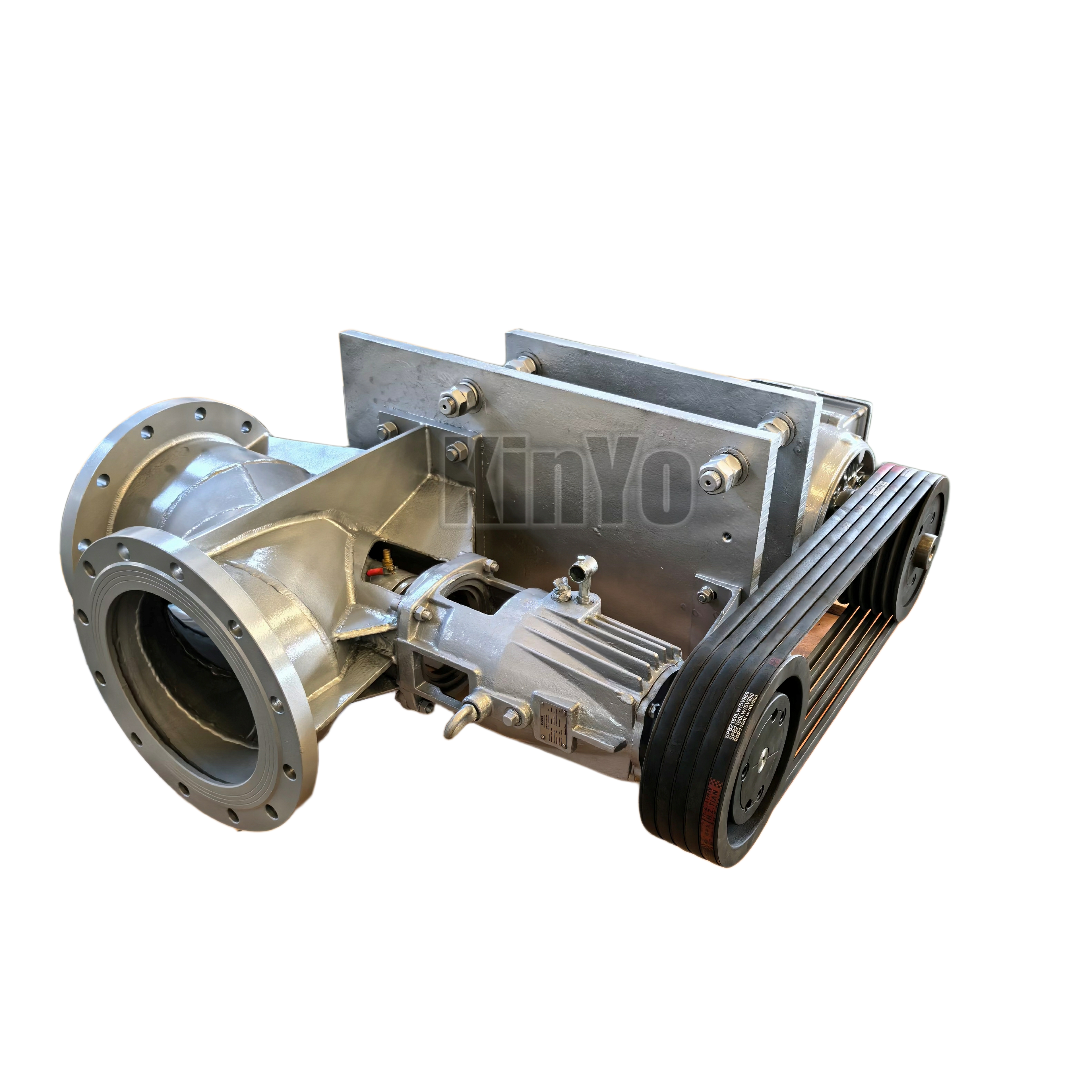
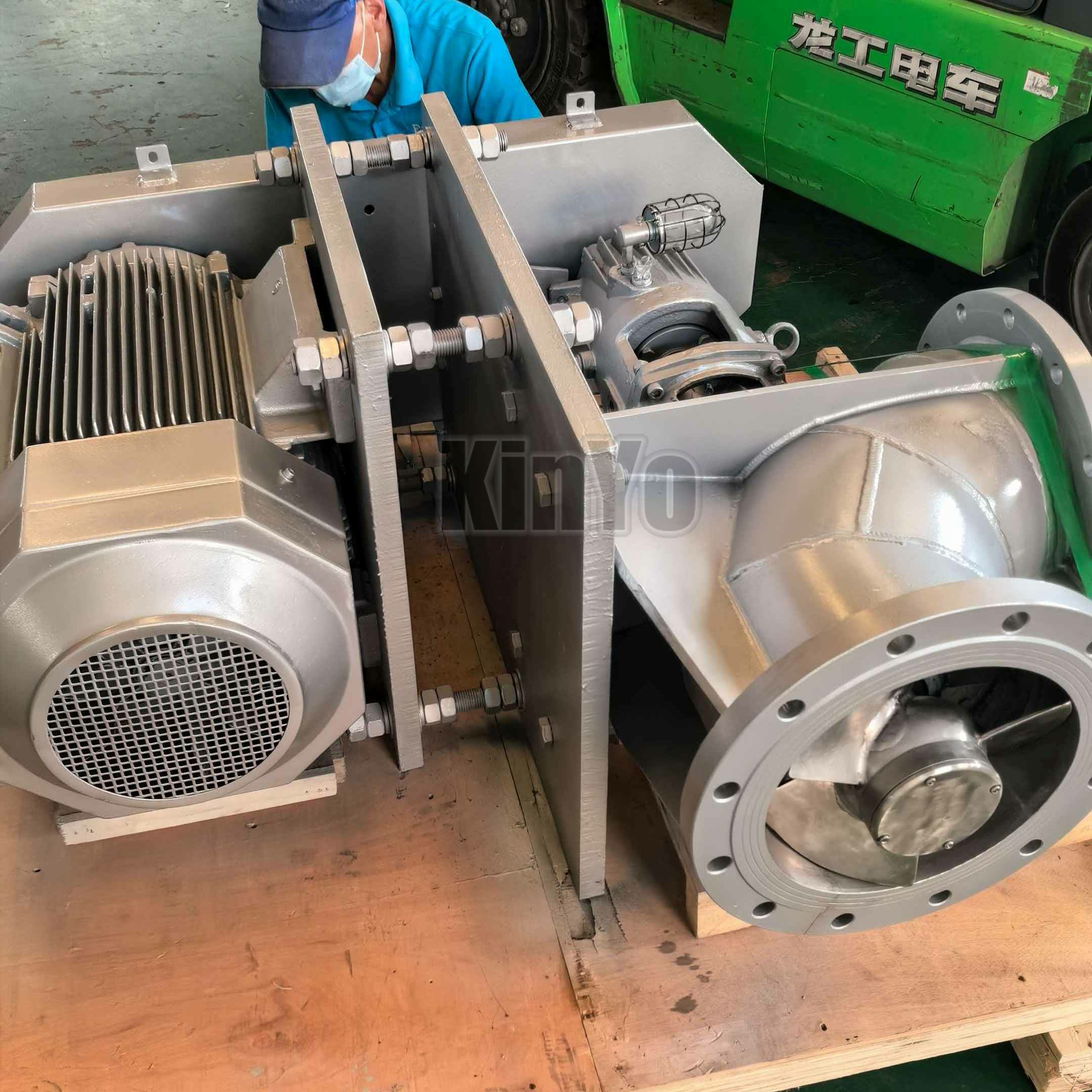
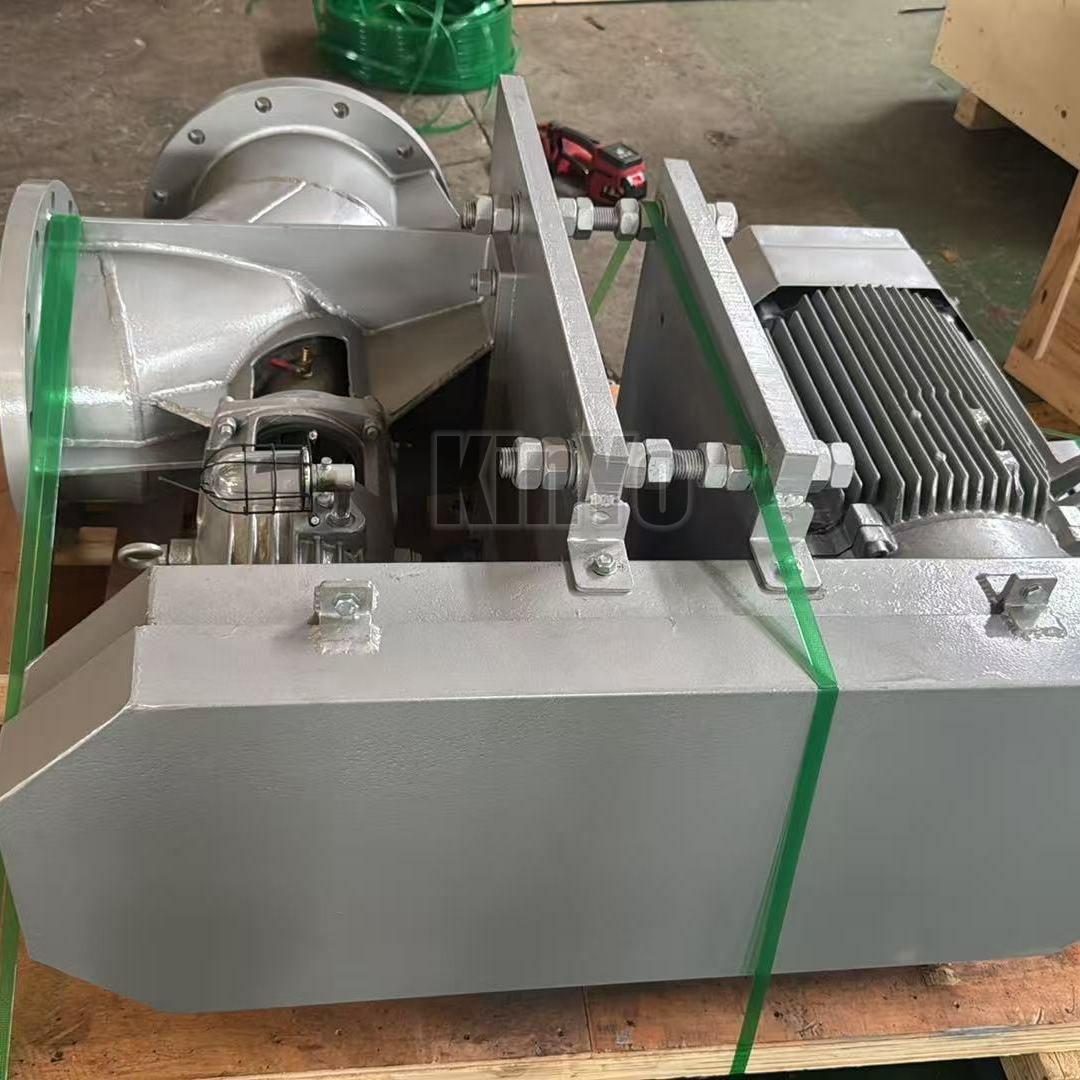
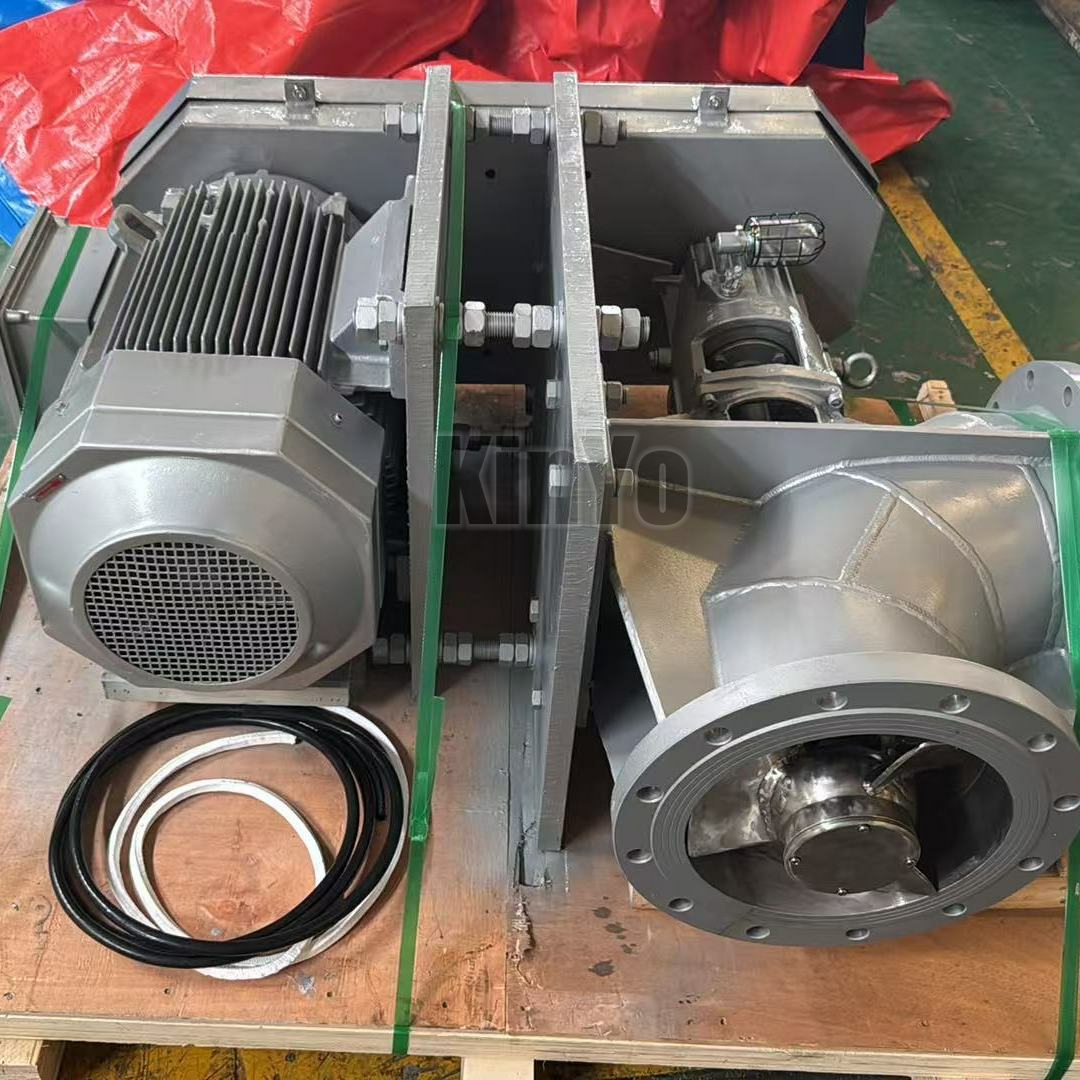
Forced circulation pumps do not rely on the centrifugal force of the impeller to transport liquids; instead, they utilize the thrust of the rotating impeller blades to make the liquid flow along the pump shaft. When the pump shaft is rotated by the motor, the helical angle between the blades and the shaft axis generates thrust (or lift) on the liquid, pushing it out and discharging it through the discharge pipe. Once the liquid is pushed out, a partial vacuum is created at the original location, and the outside liquid, under atmospheric pressure, is drawn into the impeller through the inlet pipe. As long as the impeller continues to rotate, the pump can continuously draw in and discharge liquids.
